
One of the more commonly overlooked goals of transhumanism, if I may say so, is the use of automated tools and novel technologies for aesthetic exploration and refinement. We are now living in the best era yet to be an asthete and philosopher of beauty, for the outsourcing of cognition allows amplification of vision. The more precise and detailed instructions we give to an AI and the more we’re willing to play around, the more interesting images we can generate that allow us to self-reflect. They are like little fragments of psyche popping up to say hello on the computer screen, inviting introspection and keeping the contemplative juices flowing, so to speak.
I was recently learning about Ikebana, the Japanese art of flower arranging, and its significance as taught by Vajrayana teacher Chogyam Trungpa Rinpoche; it gave cause to wonder if his aesthetic approach could be applied to generating images with Gemini. Gemini, I must say, is a marvelous tool that also functions like a dream library: you can find exactly the information you are looking for and request for it to be presented in whatever format you can think of. I truly count myself lucky to by able to approach the contemplative arts through artificial intelligence… there’s a Tibetan saying that goes something like “if you pluck a flower, you are breaking your own leg” – now there is no issue to be had from harvesting fresh blossoms and branches, we can explore an infinite variety of arrangements using AI imaging tools and leave the real ones to the bees. This approach shifts focus from being purely a creator of virtual arrangements to a critic and contemplator of them.
Within the art of flower arranging itself, there are layers of profound values to be appreciated and explored. An arrangement isn’t expected to be perfect, and that imperfection is a quality to be cherished, not overcome. Recognizing imperfection opens the door to acceptance, not just of the arrangement but of our various mental states. Noticing the space between elements invites spaciousness within our own mind. And of course, the brevity of a fresh display is a reminder of the fleeting, impermanent nature of our own lives. All of these qualities, while maybe far from the quantifying jargon familiar to transhumanists, are nonetheless important for anyone in the movement, as they allow for optimization and refinement of thought and feeling… therefore we could consider contemplative practices as “meditative supports” and “cognitive enhancers”.
Playing around with the prompting is a mental workout in and of itself! I ended up asking Gemini to produce one image for each season, respecting the values and principles as laid out by this particular Buddhist master I’m drawn towards. Here were the results:
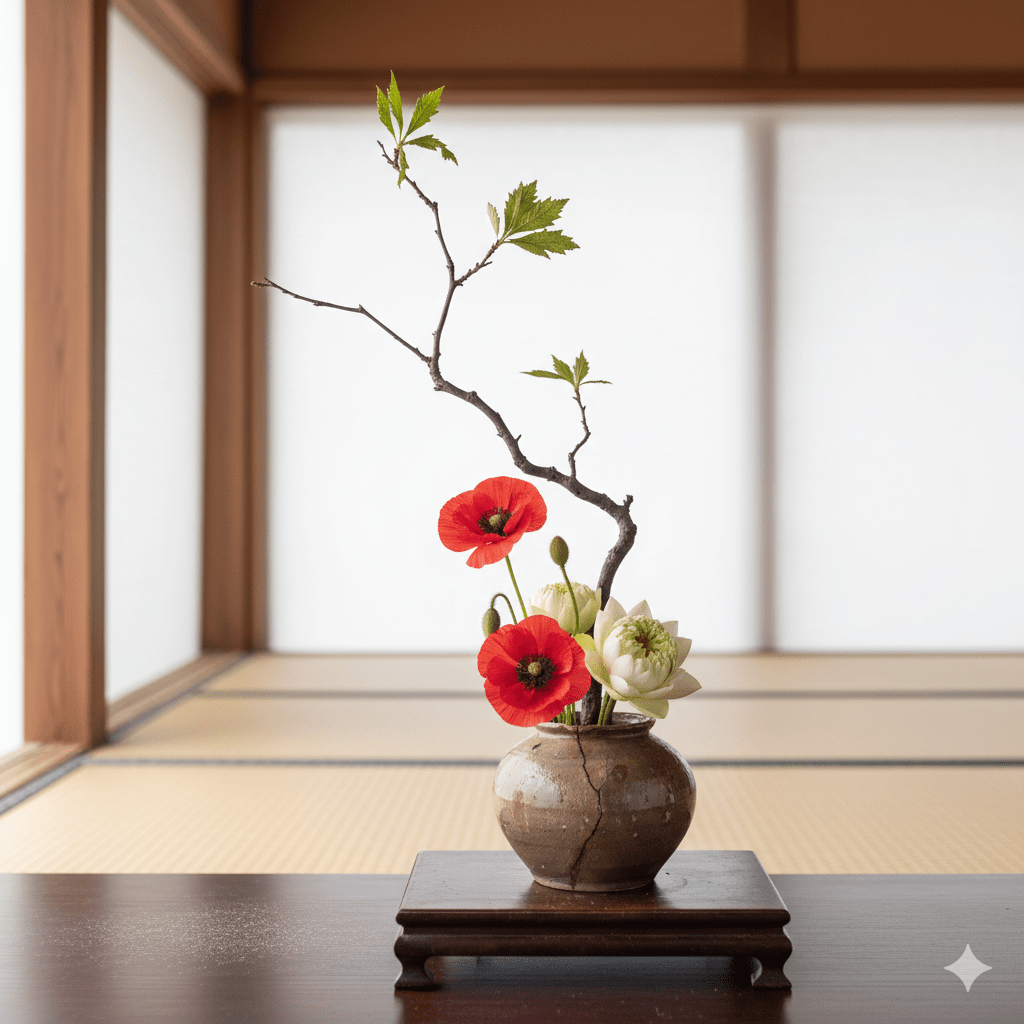
an Ikebana display for each season, crafted with the philosophical insights of Chögyam Trungpa Rinpoche in mind, emphasizing naturalness, direct perception, and the beauty of impermanence.
Spring Ikebana: Emphasizing new growth, budding life, and the vibrant, sometimes chaotic, energy of emergence.
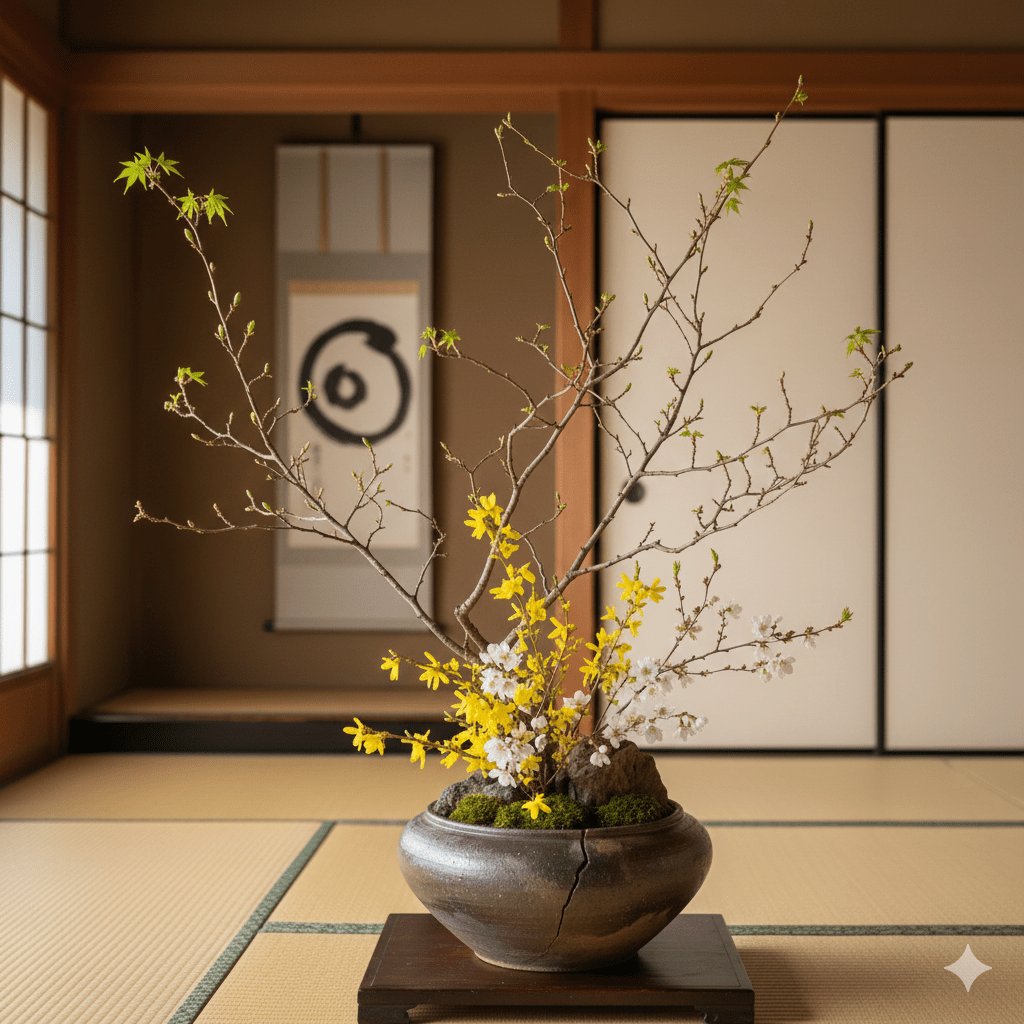
Summer Ikebana: Reflecting lushness, fullness, and the warm, open energy of the peak growing season, while maintaining a sense of space.
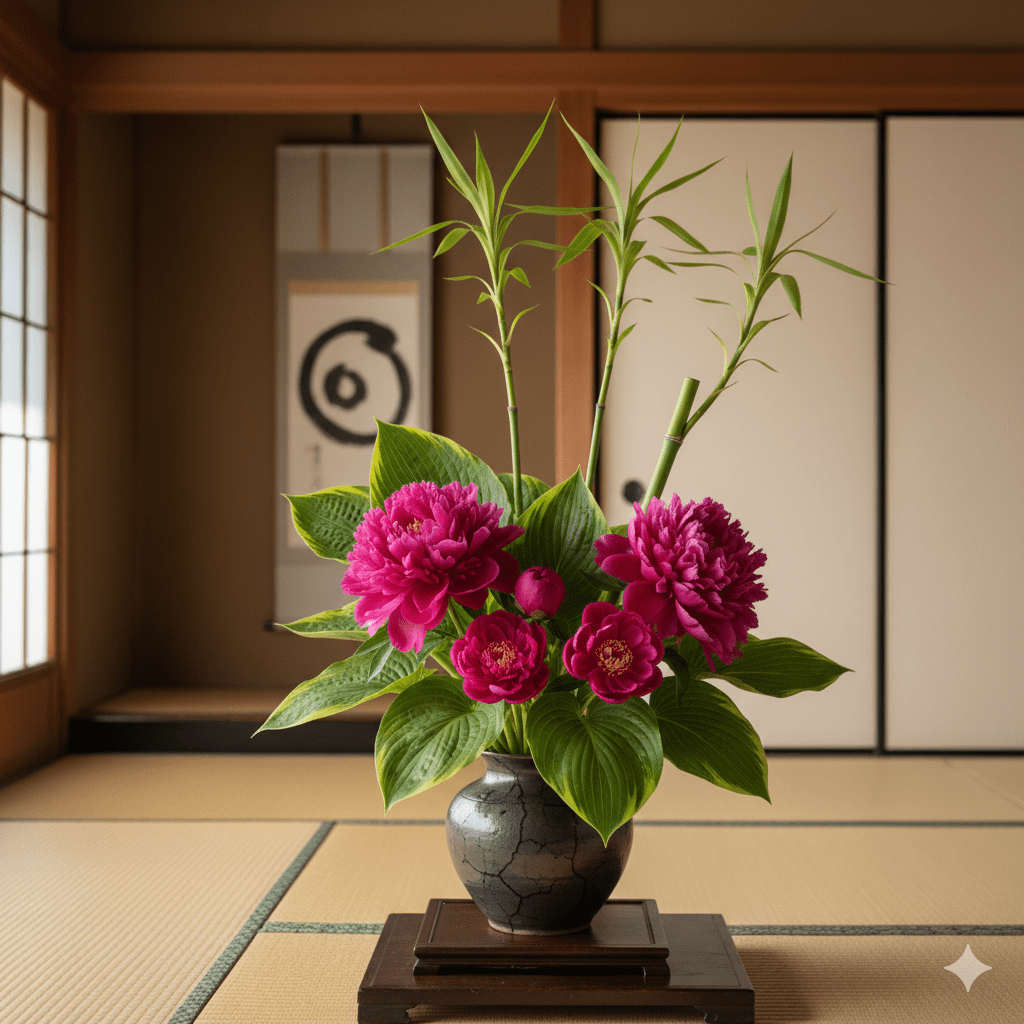
Fall Ikebana: Capturing the beauty of letting go, the rich hues of decay, and the elegant transition to introspection.
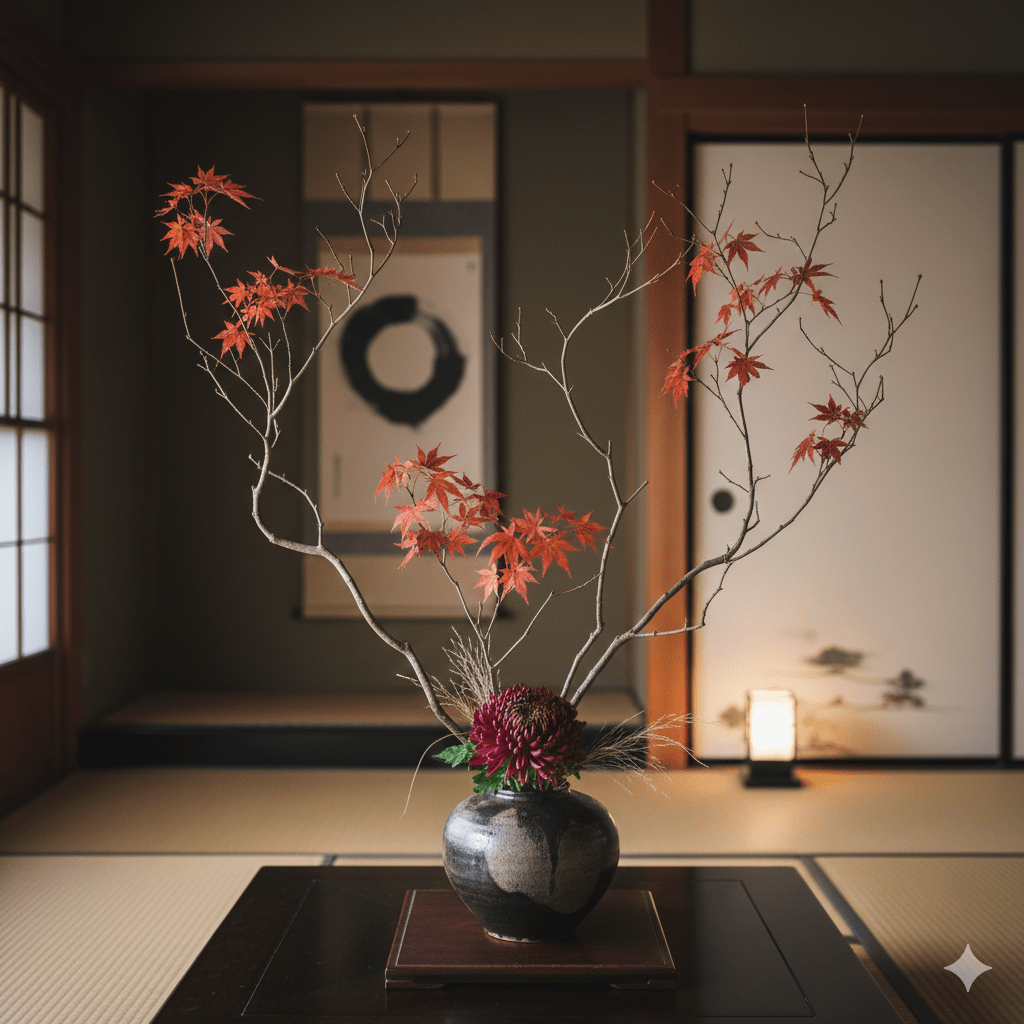
Winter Ikebana: Reflecting the stark beauty of dormancy, resilience, and the quiet clarity of nature in its most bare form.
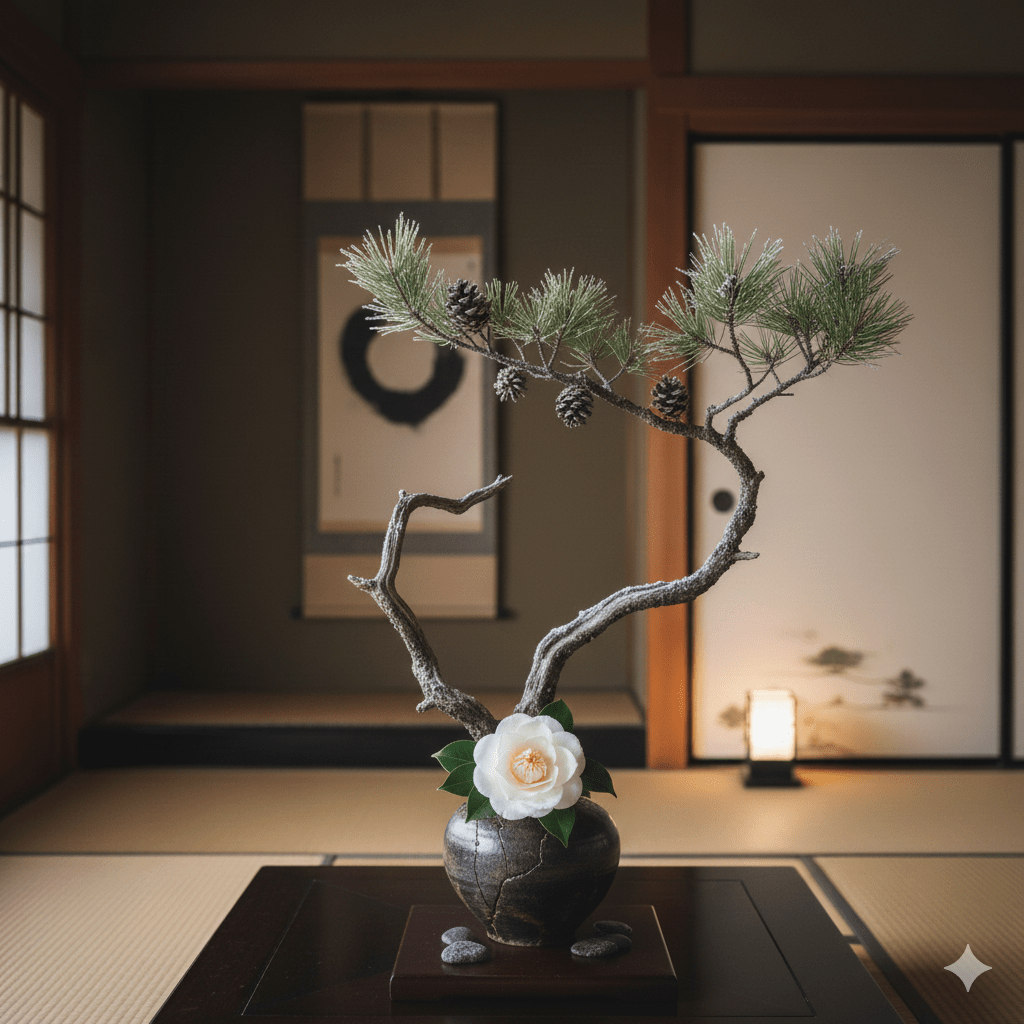
I think they’re marvelous. And while I’m not biographical expert, I’m sure these displays respect the original vision in many ways. It gives cause to wonder just how far something like this could go… we could create “digital impressions” of ourselves by recording large volumes of psychometric data, aesthetic and shopping preferences, as well as language habits, and effectively extend our cognitive processes into the substrate of computational machines… It doesn’t necessarily mean that we would have a digital copy of ourselves, I think it would be more like an augmentation of our current mental processes rather than the provision of a full new self, but that could change. And with virtual reality, who knows, maybe we could all get together and make some cyber Ikebana together one day.
I’m very interested in the use of artificial intelligence for elaborating schools of aesthetic thought, and in Ikebana, there is more than one approach. One could even come up with an Ikebana-bot that produces a different unique arrangement every day, with tags to describe what school of thought it’s from as well as a justification as to how the arrangement conforms to the principles and values of that particular school over other ones; over time there would be a whole photo album of Ikebana images, categorized by season and school, for public appreciation on an Instagram reel or for deeper study of the art.
Transhumanists use automated tools to author their visions. It is my vision that life should be filled with beauty and contemplation, and there is something undeniably poetic and classy about the whole Japanese art of flower arrangement. My hope is that artists and dreamers of all kinds will use artificial intelligence to explore, be creative, and augment their craft. This is only the beginning.
 Cybernet David
Leave a comment