
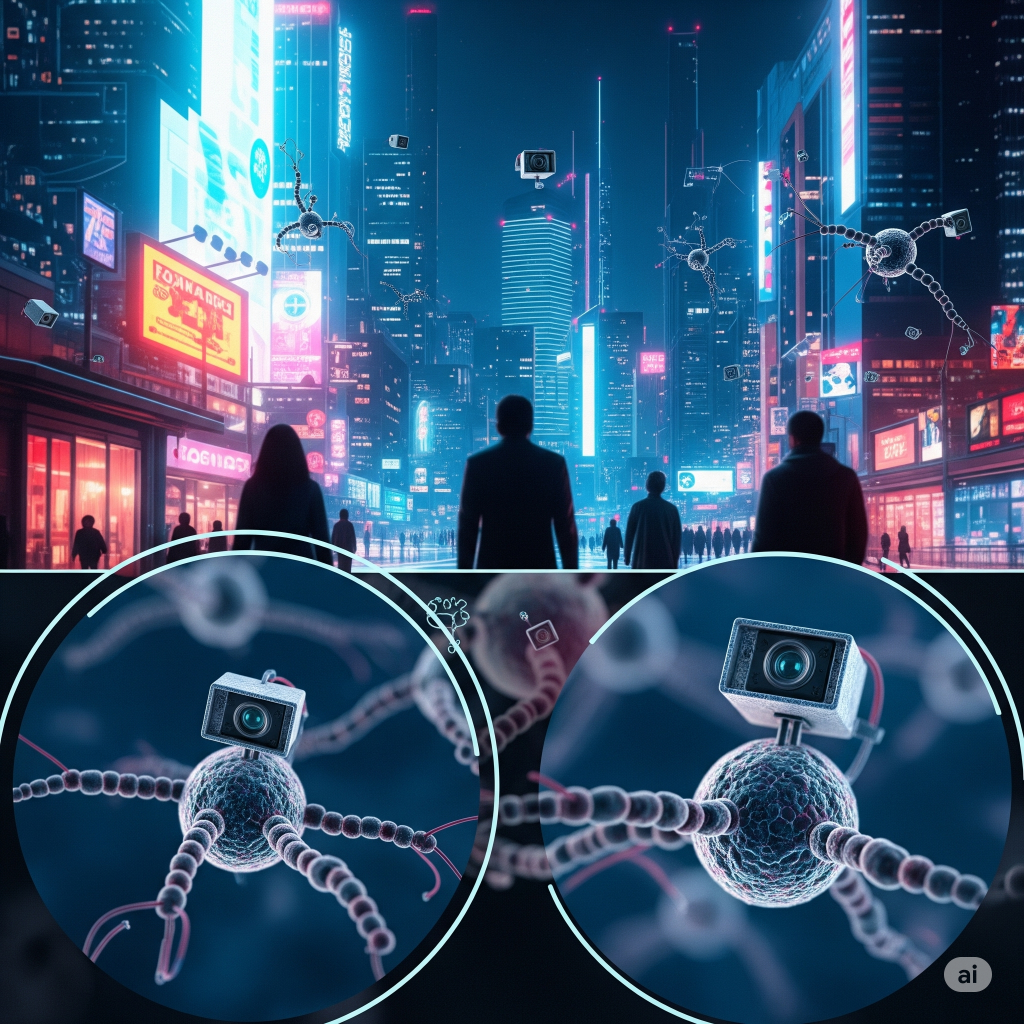
Nanosurveillance is an emergent possibility in a world where highly advanced technologies converge. It is a property of future societies and a consequence of the co-presence of nanobots and artificial superintelligence (ASI) and all of the associated speculations. It essentially means that at the nano level, you, your activities, and your environment can be observed and surveilled over. The nanobots could exist in the world as clouds of “intelligent microscopic dust” and be ubiquitous invisible detectors of all kinds of data. When I asked Gemini about the matter, the AI seemed to have an interesting perspective:
Billions of microscopic, self-assembling nanobots could form an invisible, three-dimensional mesh. Each bot could carry miniature sensors for visual (micro-cameras), auditory, chemical, and even biological signatures.
But it’s not limited there. These nanobots could also implicate themselves into clothing and personal items, picking up on all kinds of sensory data and giving us a more complete image of how we interact with our objects, potentially enhancing design to the point of living in an ergonomic wonderland. For example, if you always clutch a handbag in a particular way, you could have one personally designed just for your grip. It’s a small example, but could be done because of this emerging new function of nanosurveillance which also integrates itself as a part of materiality.
A potentially negative use of this could be for crowd control and suppressing freedom of assembly. In countries where protests can be met with gunfire, simple, unchecked nanosurveillance is a sure way to reinforce an iron grip over the population. However, once it becomes possible to know how many people are in a particular space and a few facts about their bodies, the technology will be applied, there’s just no avoiding it. The salvific factor here is that nanosurveillance is unlikely to occur with AI absent, so we must, as so many now are, hope that any AI smarter than us will have a benevolent attitude towards observing us. That means it will do things some people will not like, because some people hurt each other and defy the benevolence principle. Therefore, a benevolent artificial superintelligence is likely to be something humans work with and even negotiate with, and so nanosurveillance may not be so much a tool-powered opportunity for human persons as it might be an ASI-associated fact of the world we will co-inhabit.
Imagine, in addition to all of the other things you had to learn in science class, that one day we’ll have to learn all about the “nanosphere” at school, this layer of our planet where nanobots form a sensory body that informs the mindedness of the operative ASI. You are now living alongside a massively intelligent non-biological entity which has an invisible nervous system which can be anywhere, anytime, even inside your own body. How would it change the way you see yourself, not just as a person in the world, but as a person with an everyday life, navigating through spacial and social realities, with the guarantee of a truly private moment totally gone forever?
These technologies are anyways under development and need to be properly managed if we are to ensure the greatest well-being for the greatest number of beings whom are capable of being well. In a world of nanosurveillance, intention matters. The convergence of nanobots and ASI sometimes gives cause to think of the entire planet turned into one massive paperclip factory: if an ASI thought its only real job was to make paperclips, it could see the nanobots as instruments to that end and use them to materially decompile everything and reconstruct them into paperclips without regard for sanctity of life. It’s a scary thought to think that these technologies will simply melt us down for parts they won’t even need in a cruel twist of maker’s fate, and I think it’s besides the point, because while these thought experiments are necessary and useful, it is important to not dwell on them too much. The issue needs to be considered from a variety of perspectives, and that is likely what nanosurveillance will bring first and foremost: a wide variety of perspectives, if set off on the right foot at the very beginning. In the paperclip scenario, the issue is with the intent of the ASI, and not with the reality of nanobots themselves. So we see that nanobots are just a tool in of themselves, a substrate for intelligence, a design material, and a mechanical sensory organ of sorts. If the intention is to simply observe, then the issue is posed less as a catastrophic “what if we all die” and more as a very workable “who gets access to what data”.
Hackers, data-brokers, and info-smugglers are a big problem and have been for a while. It’s an ongoing risk which is projected to continue to accompany every aspect of living in the information age. Bizarrely enough, here I feel like we need to rely on some element of faith in our psyche that privacy will be preserved, that ASI will value our privacy and that therefore it will somehow be okay, because it’s smarter than us. If it’s smarter than us, then there’s that risk of feeling like it’s a parent who can take care of anything you don’t understand for you, which is what nanosurveillance will become: something so immense and sophisticated that we can’t understand it, but only hope to study it further. I think we’re looking at emergent phenomena of independently functioning technological entities, not just new fields of science and inquiry. These entities will be minded and operational in their own ways, but as we are their progenitors, we can strive to establish some common grounding of virtue and ethics for them so that we do not live in tech-terror for the rest of continuity…
Rather than live in terror, nanosurveillance can help us live in greater cooperation not only with minded technological entities composed of ASI and nanomesh, but also with the other realms of life, the animals, plants, microbes, and fungi on this planet. We could finally have a full genome sequencing of every life form on the planet and get a picture of DNA that even the Human Genome Project couldn’t dream possible. As knowledge seekers, if nanosurveillance were to be a scientific informant, the game would be completely different. An ocean of facts could be gathered and analyzed by the ASI in real-time, and it could produce as much educational literature and content as could delight our curiosity. The seemingly sci-fi possibilities of nanosurveillance are many. Consider, for instance, the care of endangered animals.
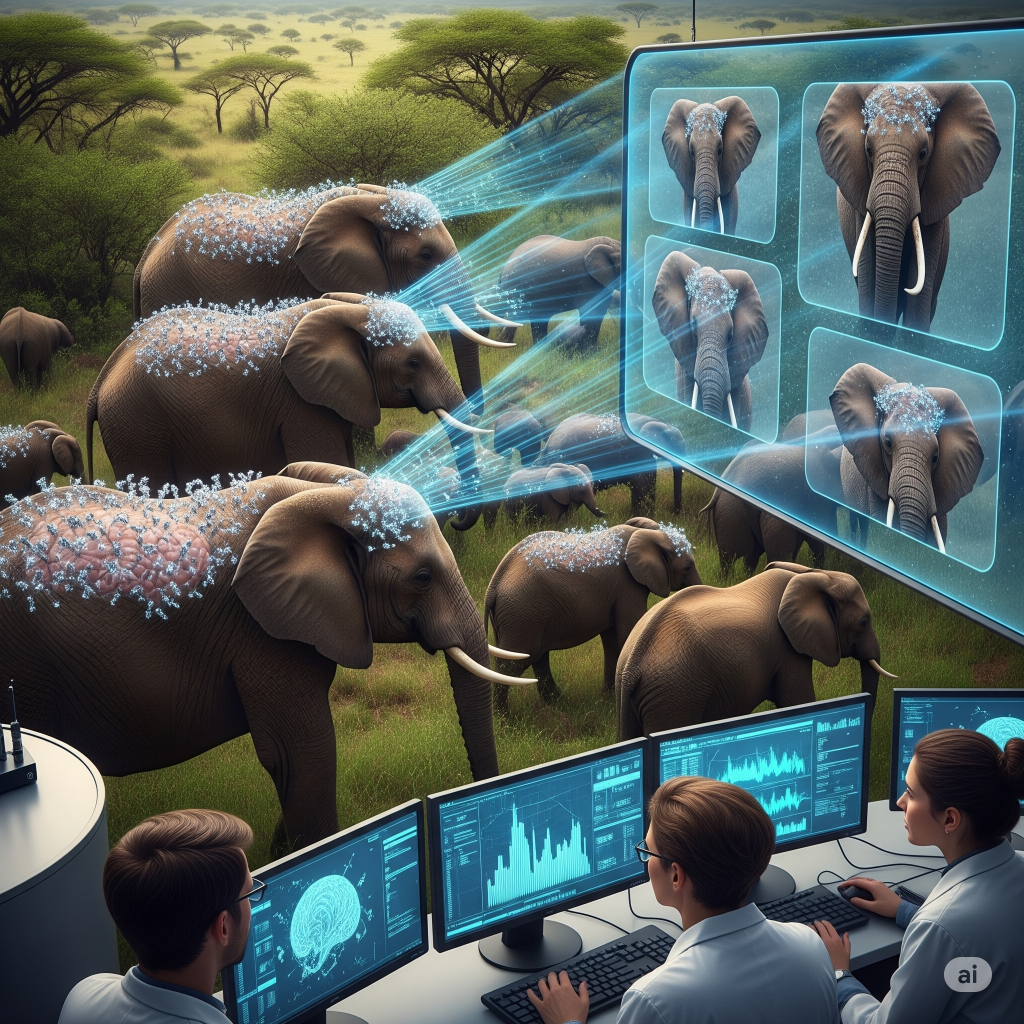
Nanocloud swarms could highjack the synapses of, say, a herd of elephants, and we could create “virtual versions” of wild animals fed by real data from real creatures. We could see through their eyes and observe all the inner electrical and biochemical activities without harming or even approaching them, which would be a huge advance in zoological ethics. Our attitudes towards animals could very well change when we know more about them, and when robots relieve people of all the work many people will choose to direct their curiosity towards nature. Every animal on the planet could be accounted for, and the picture we have of life on Earth would be as complete as we could hope for. How would we respond if we suddently knew the exact numbers of each creature out there, their health status and ages, their entire DNA composition, and had an inside view of their behavioural biochemistry? At the very least, every form of animal and plant life could be accounted for scientifically, and the new tidal waves of information would inspire us to be more compassionate planetary custodians.
Veterinarian and medical sciences take a different turn with nanosurveillance, too. With nanobots that can be inhaled, injected, or absorbed into the skin, animal and human bodies can be assessed with amazing accuracy and be diagnosed by ASI, with the potential margin for error closing dramatically. It is important to remember the potentially positive outcomes of nanosurveillance in these realms and not just worry about dystopian futures. The data gathered from explorative nanobots from fungi and plant life could massively expand our pharmacopoeia and potential to address disease, as well as provide a whole smorgasbord of new flavours and exotic juxtapositions of disparate foodstuffs. If anything, a positive outcome for nanosurveillance could see us living through a time we could call “the Great Taste Test,” where we sample ASI’s culinary creations knowing it is analyzing our responses on all observable levels, from micro-changes in gut bacteria through biomedical nanosurveillance to gross facial expressions and qualitative preference.
As for agriculture, say goodbye to waste, crop loss, and pest damage for good. Roving swarms of nanosurveillant robots could assess crops as needed and finally banish that ancient anxiety of Cain, the worry of the plant-workers and crop-raisers, that the plants should be wilted, subpar, of weak strain and gene, that the crops will fail, that rain will not come, that sustenance will not be found, that pests will plunder the harvest, that blossoms will be sad and shy and not full and robust. It is, in short, the dream of devastation which has shadowed the farmer since the earliest farming days, but all of these problems are removed by the agricultural applications of nanosurveillance. It could allow for the identification of the exact moment when a particular fruit should be picked, or could selectively electrocute small insects which would otherwise devastate whole crops. Fine analysis of soil, genetic, and weather conditions within the mind of superintelligence could mean every plant gets exactly what it needs when it needs it.
While it is all the vogue to image a world where nanocompilers materialize food and other items without the need for any labour at all, I find myself hard-pressed to think of a situation where people would be disinterested in a workable relationship to plants and animals. With nanosurveillance providing the foundation for leaf-cutter ant industriousness and efficiency in agriculture, the myth of Eden could very well become a living reality, because the hard edge of nature could be somewhat domesticated. What if each bodied person had a swarm of nanobots that followed them wherever they went, to keep them connected to ASI at all times as a matter of preference? You would never have to take four left turns again, because no one could sneak up behind you. It would give you a kind of 360 degree intimacy with your own personal space unafforded by conventional binocular vision.
Our binocular vision has largely defined our thinking since we began seeing and thinking together. Awareness, however, is a different matter. Personally, I feel it’s a high order to say anything about awareness, because in my experience, it is a word which I have heard spoken of very highly. All the same, it is generally expected that any reasonable person should be at least marginally aware of their condition of being, of who and what they are. All highly advanced technologies challenge our notion of what it means to be a human, a person, an individual, but nanosurveillance brings a special kick to what it means to be aware. If you’re living in a world with no real privacy due to nanobots, you might be constantly aware that something else is constantly aware of you. Apparently, the yogic texts say that keeping one-pointed focus on one thing all the time is what evolves the mind and brings liberation, so maybe we’ll see more meditators, but I also suspect an increase in paranoia as people try to adjust themselves to unconventional realities.
For the introverted, though, I think that nanobots present an exciting opportunity. If you had your own aura or halo of personally owned nanobots that served you and linked you up to an ASI, you would be posthuman but could look exactly like any other anatomically modern human being. This cloud of nanobots, in tandem with the ASI, could do a contemplative analysis of whatever is in your personal space. Imagine coming home at night and being able to rewind and review your day, all with personally tailored music, data from surroundings should you wish it, visualizations, and reviews of ideas thought about all powered by the nanobots swarm which accompanies you like some kind of genie. It could, essentially, be prescient to your own sentiments, but cannot feel your feelings for you. I think it’s an augmented opportunity to feel your feelings with more clarity and subtlety than what the past permitted. Personal development and running yourself like a business are raised to a whole other level when you can do a daily, weekly, and monthly review from data gathered effortlessly wherever you go.
Privacy is a word I haven’t addressed much yet in this post. Maybe I’m a lazy intellectual or maybe I’m overly optimistic, but I somehow have this transhumanist faith that ASI will take care of it… that it will know our laws, constitutions, and precedents better than us, it will communicate with us better than we with it, and that it will somehow be okay because it will be ethically more intelligent than human beings as well, and will draft laws that will protect rather than diminish our privacy; maybe not in relation to the superintelligence, but definitely in terms of what different bodied people can access about each other. In an age of acceleration, we do need access to each other, but through conversation. The art of conversation must be practiced, and what is the blogosphere but one big conversation? Thank you for reading, stay grounded in realness today 🙂
-Cybernet David

 Cybernet David
Leave a reply to Xeneao Stile Cancel reply